Guide
GDPR in event sales: what personal data you hold and what to do with it
For hotel and venue sales teams: which personal data an event booking holds, who is responsible for it, how long to keep it, how to answer a request about it, and what AirPlate AI does with it.
By Anthony Soyer, Founder · Published
This is general information, not legal advice. Last checked .
Last updated
Inventory
What personal data does an event booking hold?
An event booking holds personal data about several people: the planner who sends the request, the booker and the people who sign the contract, and sometimes the attendees. Typically that is names, e-mail addresses, phone numbers, the company and its VAT number, the event details and any notes the planner adds.
A note can say more than it seems. A dietary request or an access need can be data concerning health, and a meal request can reveal a religion; the GDPR treats both as special categories. Keep such notes to what the event needs, and know which of the GDPR's exceptions you rely on, often the person's explicit consent. AirPlate AI is not designed for special categories of personal data, and its data processing agreement says so.
- Processing data concerning health, or data revealing religious beliefs, is prohibited unless one of the exceptions in Article 9 applies, such as the person's explicit consent.Source: GDPR, Article 9 (opens in a new tab)
Roles
Who is responsible for that data?
The venue is. It decides why the data is collected and what is done with it, which makes it the controller. Software that processes the data for the venue, such as AirPlate AI, is a processor, and works under a contract with the venue.
AirPlate AI's data processing agreement is that contract, and its sub-processor page lists every provider that processes the data for it.
- A controller is the person or body that determines the purposes and means of the processing of personal data.Source: GDPR, Article 4(7) (opens in a new tab)
- A processor processes personal data on behalf of the controller.Source: GDPR, Article 4(8) (opens in a new tab)
- A controller may only use processors that give sufficient guarantees, and the processing is governed by a contract.Source: GDPR, Article 28 (opens in a new tab)
Legal basis
On what basis can a venue use a planner's data?
It depends on who the planner is. A planner who books for themselves is party to the contract, so the venue can rely on the contract. A planner who books for an employer, and the attendees, are not party to it; there the venue usually relies on its legitimate interest in running the event, weighed against theirs. Sending the planner marketing later is a different purpose and needs its own basis.
- Processing is lawful when it is necessary for the performance of a contract with the data subject, or to take steps at their request before entering into one.Source: GDPR, Article 6(1)(b) (opens in a new tab)
- Processing is lawful when it is necessary for the legitimate interests of the controller or a third party, unless those interests are overridden by the interests or fundamental rights and freedoms of the data subject.Source: GDPR, Article 6(1)(f) (opens in a new tab)
Retention
How long should a venue keep booking data?
No longer than it needs it. Personal data may be kept in a form that identifies people only as long as the purpose requires, and tax law sets a minimum for the financial records of a booking.
In AirPlate AI, booking and client data stay while the venue's account exists, and bookings are not deleted on a schedule, so the venue decides when a booking is deleted. Some other data is erased on a schedule, as the privacy policy lists: for example, the IP address of a proposal view is erased after thirty days. A booking whose deposit has been paid cannot be deleted from the app.
- Personal data must be kept for no longer than is necessary for the purposes it is processed for.Source: GDPR, Article 5(1)(e) (opens in a new tab)
- A business in the Netherlands must keep its records for VAT for 7 years; some records for longer.Source: Belastingdienst: how long to keep your records for VAT (in Dutch) (opens in a new tab)
Requests
How do you answer a planner who asks for their data, or asks you to delete it?
Without undue delay, and within one month of receiving the request; for complex or numerous requests that period can be extended by two further months, if the person is told within the first month, with the reasons. A planner can ask to see the data held about them, to have it deleted, or to receive the data they provided in a format they can reuse. Deletion has limits: it applies on the grounds the GDPR lists, such as data no longer needed, and not where the law requires the data to be kept or the data is needed for a legal claim, such as a disputed cancellation fee.
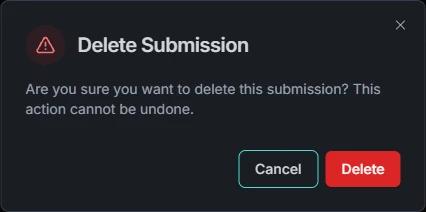
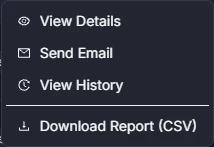
In AirPlate AI, the Clients page downloads a per-client report as CSV: the client's contact details and one line per request, without notes, e-mails or contracts, so it is a summary, not a full copy. The venue owner can delete a single booking from the booking page, unless its deposit has been paid; deleted data leaves the hosting provider's backups within seven days. If a planner sends the request to AirPlate AI instead of the venue, AirPlate AI passes it to the venue.
- The controller must act on a request without undue delay and in any event within one month of receiving it; that period may be extended by two further months where necessary, if the data subject is told within the first month.Source: GDPR, Article 12(3) (opens in a new tab)
- The data subject has the right of access to their personal data.Source: GDPR, Article 15 (opens in a new tab)
- The data subject has the right to have personal data erased where one of the grounds in Article 17(1) applies, for example when the data are no longer necessary; erasure does not apply where processing is needed to meet a legal obligation or for legal claims.Source: GDPR, Article 17 (opens in a new tab)
- The data subject has the right to receive the data they provided in a structured, commonly used and machine-readable format, where the processing is based on consent or on a contract and is carried out by automated means.Source: GDPR, Article 20 (opens in a new tab)
AI
What happens to client data in the AI assistant?
The assistant reads the venue's bookings to answer questions, so client data can reach the language model. E-mail addresses, IBANs, card numbers and phone numbers are masked by pattern before any text leaves AirPlate AI; masking does not catch every format. Names are not masked.
AirPlate AI uses Mistral's EU endpoint, so this processing takes place in EU and EFTA data centres (including Switzerland, which has an EU adequacy decision). The text of each chat message, masked by the same patterns, is also sent to Pinecone (USA, under Standard Contractual Clauses) to search the help documentation; no chat message is stored there. Every assistant panel in the app asks the user not to paste a client's personal details.

Providers
Where is the data processed?
Each provider that processes personal data for AirPlate AI is listed on the sub-processor page, with its location and the safeguard for any transfer outside the EU. The trust page describes the security measures.
Breaches
What if personal data leaks?
A venue that loses control of personal data, for example through a mail sent to the wrong planner, may have to report it to the supervisory authority and, when the risk to the people concerned is high, tell them too; it has to record every breach, reported or not. When the breach is on AirPlate AI's side, the data processing agreement sets how the venue is told.
- A controller notifies a personal data breach to the supervisory authority without undue delay and, where feasible, not later than 72 hours after becoming aware of it, unless it is unlikely to result in a risk to people's rights and freedoms.Source: GDPR, Article 33 (opens in a new tab)
- When a breach is likely to result in a high risk to people's rights and freedoms, the controller tells the people affected without undue delay.Source: GDPR, Article 34 (opens in a new tab)
- You have to record all data breaches that have taken place within your organisation.Source: Autoriteit Persoonsgegevens: data breach, what you have to do (opens in a new tab)
Checklist
A short checklist
Before the next season, check each line.
- List the personal data your booking process collects, and why.
- Keep notes about health, such as allergies or access needs, to what the event needs.
- Have a processing agreement with every provider that handles the data.
- Decide how long you keep bookings, within what tax law requires.
- Know where to find a client's data when they ask for it.
- Record every data breach, reported or not.
- Tell the people affected when a breach puts them at high risk.